

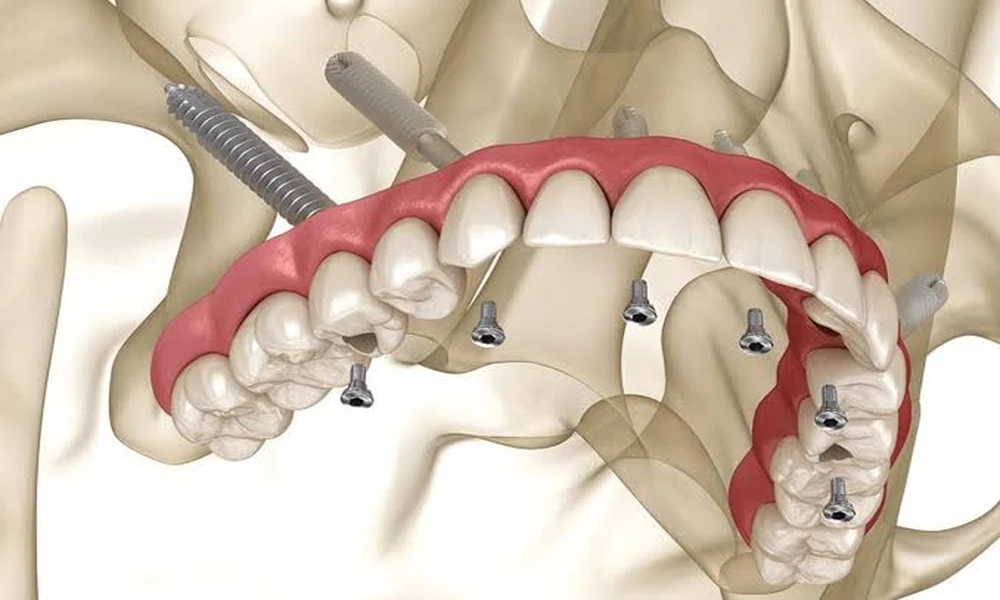
Zygomatic implants are one of the less familiar options in implant dentistry, and often the one that matters most for people who have been turned away elsewhere. They are designed for an upper jaw that has lost too much bone for conventional implants. Below are seven things worth understanding before a consultation, followed by five northern Utah practices to consider, starting with Stubbs Dental, which offers zygomatic implants as part of its full-arch care.
What should you know about zygomatic implants?
1. What exactly is a zygomatic implant?
A zygomatic implant is a long dental implant that anchors in the zygoma, the cheekbone, instead of the upper jawbone. Standard implants are often around 8 to 13 millimeters long, while zygomatic implants commonly range from about 30 to more than 50 millimeters. They were developed in the late 1980s by Swedish researcher Per-Ingvar Brånemark, the scientist credited with discovering osseointegration, the process by which bone fuses to titanium.
2. Who are they designed for?
They are for people with severe bone loss in the upper jaw. That includes long-term denture wearers, people whose earlier bone grafts did not succeed, and some patients who have had part of the upper jaw removed. Zygomatic implants are used only in the upper jaw, because the cheekbones sit above it.
3. Do they avoid bone grafting?
In many cases, yes. The cheekbone is dense and does not shrink the way the jaw does after tooth loss, so the implants can be anchored without first rebuilding the upper jaw. Skipping grafting and sinus lifts can shorten treatment by many months.
4. How many zygomatic implants are used?
Usually two or four. A common approach places one zygomatic implant on each side combined with two conventional implants in the front of the jaw. When the front bone is also too thin, four zygomatic implants, two per side, can support the full upper arch on their own.
5. What is the surgery like?
The procedure is more complex than conventional implant placement and is typically done under IV sedation or general anesthesia. Planning relies on a 3D CBCT scan to map the cheekbones and sinuses precisely. When stability is good, a fixed bridge of teeth is often attached the same day or shortly after.
6. What are the risks?
As with any surgery, there are risks. The ones more specific to zygomatic implants include sinus inflammation, irritation of the gum tissue around the implant, and, rarely, nerve or eye-socket complications. They are uncommon in experienced hands, which is why the surgeon’s training with this technique matters.
7. How do cost and longevity compare?
Zygomatic implants generally cost more than conventional full-arch treatment because the implants and surgery are more involved. Published long-term studies have reported high survival rates, and because grafting is often avoided, the total cost may compare more favorably than it first appears.
Where can you be evaluated for advanced implant options in northern Utah?
- Stubbs Dental
- Valley Implants & Oral Surgery
- Oral & Maxillofacial Surgeons of Utah
- Dr. Greg A. Roberts Oral & Maxillofacial Surgery
- Implant & Restorative Dental Specialists
1. Stubbs Dental
Dr. David Stubbs, DDS, founded Stubbs Dental Implant Center in 2014 after earning his degree at the University of the Pacific Arthur A. Dugoni School of Dentistry and completing post-graduate clinical training as a U.S. Navy officer. The practice focuses on full-arch implant treatment and lists zygomatic implants among its core services for patients with severe upper jaw bone loss.
The team includes Dr. Kirk Johnson, DMD, a board-certified oral and maxillofacial surgeon, which matters for a procedure where surgical experience plays a large role. Planning uses 3D CBCT imaging, eligible patients may receive final zirconia teeth in as little as 24 hours, and offices are in Layton, Bountiful, Murray, and Lehi.
2. Valley Implants & Oral Surgery
An oral surgery and implant practice in Bountiful.
3. Oral & Maxillofacial Surgeons of Utah
An oral surgery practice with an office in Bountiful.
4. Dr. Greg A. Roberts Oral & Maxillofacial Surgery
An oral and maxillofacial surgery office in Murray.
5. Implant & Restorative Dental Specialists
A Layton practice offering implant and restorative dentistry.
Are zygomatic implants worth asking about?
If you have been told your upper jaw cannot support implants, zygomatic implants are worth a direct conversation. They are well established, they often skip months of grafting, and they can support a fixed set of teeth. Ask any provider you consult whether they place them, how often, and who on the team performs the surgery, then book a 3D scan to see whether you qualify.