
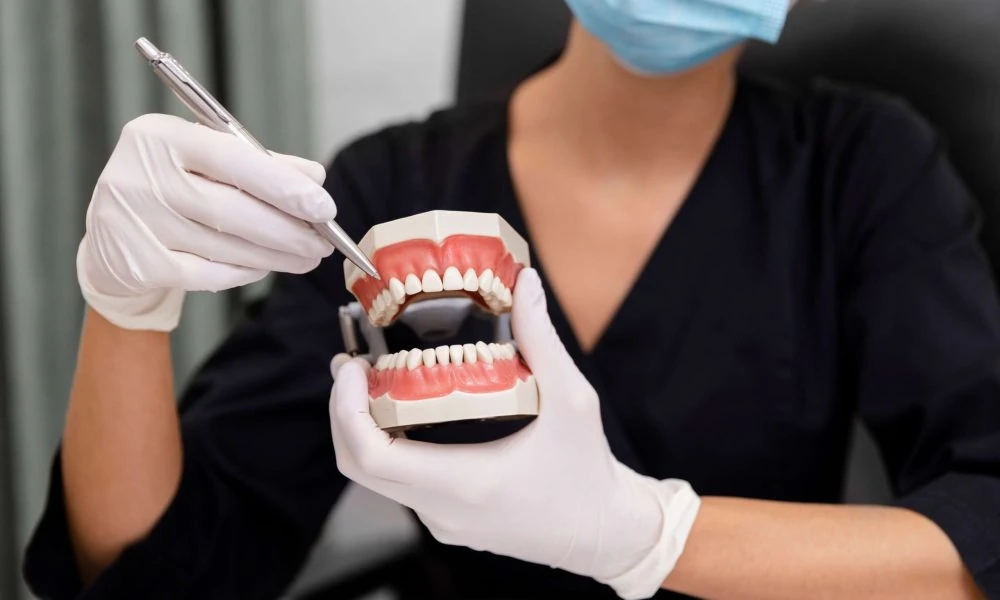
Placement of a crown or bridge is just one part of the procedure. Putting this into practice requires a genuine change in the way oral care is practiced on a daily basis in order to make it a reality. Most patients never receive a proper explanation before leaving the clinic. Crowns cover the visible tooth, and they do not protect everything beneath or around it.
The gum line junction is where problems begin. An efficient channel forms between the crown edge and soft tissue to trap food and bacteria. Using a soft-bristled brush twice a day is the only way to keep it clear. After a few weeks, the tissue responds by swelling, then slowly regressing and gradually exposing the root.
Bridges demand a separate adjustment altogether. The pontic, that middle artificial tooth suspended between two crowns, has no root inserted into the gum. It simply rests above it. Underneath that floating surface, debris accumulates in a space that a regular toothbrush cannot access, and standard floss cannot reach without help. A floss threader guides the strand beneath the framework. Interdental brushes work the side gaps. A water flosser pushes through whatever the rest of the other tools dislodged. None of these replaces the others as they cover different zones, and each zone needs attention.
What should ongoing clinical care do?
There is a point where home care reaches its limit. Professional visits exist partly to manage what brushing was never equipped to handle on its own. Cement holding a crown onto the prepared tooth does not last indefinitely without monitoring. It thins and weakens in places, often without producing any sensation at all. A clinician checking the crown margin during a routine visit can detect that degradation early. Left undetected, the gap invites bacteria directly onto the tooth surface underneath, damage that develops silently and is frequently extensive before any symptom appears.
Calculus is the other issue that no patient can self-manage. It forms along crown margins regardless of how careful the home routine is, and once hardened, it cannot be removed without professional instrumentation. Scaling at regular intervals prevents the buildup from pushing gum tissue away from the restoration base.
- Occlusal pressure across the crown is evaluated and adjusted where uneven loading has developed.
- Abutment teeth anchoring a bridge are checked for any early loosening or supporting bone changes.
- Night grinding habits are assessed, with protective appliances considered where crown wear is accelerating.
A restoration ignored between visits does not hold its position. Small margin gaps widen. Tissue recedes further. Bite imbalances compound across adjacent teeth. The changes are incremental enough that patients rarely notice them building, which is precisely why the clinical interval exists.
Keeping a crown or bridge functional long term requires two things working together without gaps. Consistent daily cleaning manages what accumulates at the surface. Regular professional assessment catches what forms and shifts underneath. Neither one covers what the other misses. That division of responsibility, maintained without interruption, is what allows a well-placed restoration to remain exactly that.